
Stainless Steel Zoo Mesh for Zoo Enclosures and Aviary Netting
Hand-woven stainless steel rope mesh for zoo enclosures and aviary netting. SS304 / SS316, black oxide finish, aperture and wire diameter specified to your project, custom panel sizes. DAP quotations worldwide.
Stainless Steel Rope Mesh Built for Zoo and Aviary Enclosures
Hebmetalmesh manufactures hand-woven stainless steel rope mesh for zoo enclosures and aviary netting. Zoos, wildlife parks and animal sanctuaries worldwide specify our SS304 or SS316 rope in rhombus mesh, black oxide finish, and custom panel sizes matched to their enclosure frames. Panels are built for a 30-year service life, roll sizes are cut to your frame dimensions at no extra cost, and all orders are quoted DAP.
Enclosure mesh is specified by two numbers only: aperture, the opening an animal cannot pass, and wire diameter, the strength that holds it. Zoo enclosures and aviary roofs are its two main applications.
| Code | Wire rope Ø | Aperture | Breaking force | Weight (kg/m²) | Typical use |
|---|---|---|---|---|---|
| HM32102 | 1/8″ (3.2 mm) | 4″ × 4″ | 7,800 N | 0.96 | Roof of tiger, lion or leopard enclosure |
| HM3276 | 1/8″ (3.2 mm) | 3″ × 3″ | 7,800 N | 1.40 | Tiger, lion, leopard enclosure (vertical) |
| HM3250 | 1/8″ (3.2 mm) | 2″ × 2″ | 7,800 N | 2.10 | Tiger, lion, leopard enclosure (vertical) |
| HM24102 | 3/32″ (2.4 mm) | 4″ × 4″ | 4,091 N | 0.54 | Zoo fencing, barrier mesh |
| HM2476 | 3/32″ (2.4 mm) | 3″ × 3″ | 4,091 N | 0.72 | Roof of tiger, lion or leopard enclosure |
| HM2450 | 3/32″ (2.4 mm) | 2″ × 2″ | 4,091 N | 1.07 | Macaw and large parrot aviaries |
| HM20102 | 5/64″ (2.0 mm) | 4″ × 4″ | 2,540 N | 0.40 | Zoo fencing, barrier mesh |
| HM2076 | 5/64″ (2.0 mm) | 3″ × 3″ | 2,540 N | 0.50 | Zoo fencing, barrier mesh, deer fence |
| HM2050 | 5/64″ (2.0 mm) | 2″ × 2″ | 2,540 N | 0.80 | Monkey, crane and large bird enclosures |
| HM2038 | 5/64″ (2.0 mm) | 1.5″ × 1.5″ | 2,540 N | 1.10 | Monkey fence, small animal enclosure |
| HM16102 | 1/16″ (1.6 mm) | 4″ × 4″ | 2,135 N | 0.26 | Zoo fencing, barrier mesh |
| HM1676 | 1/16″ (1.6 mm) | 3″ × 3″ | 2,135 N | 0.37 | Zoo fencing, barrier mesh, eagles |
| HM1650 | 1/16″ (1.6 mm) | 2″ × 2″ | 2,135 N | 0.50 | Crane, flamingo and large bird netting |
| HM1638 | 1/16″ (1.6 mm) | 1.5″ × 1.5″ | 2,135 N | 0.65 | Bird aviary mesh, small animals |
| HM1625 | 1/16″ (1.6 mm) | 1″ × 1″ | 2,135 N | 1.10 | Fine bird aviary mesh |
| HM1276 | 3/64″ (1.2 mm) | 3″ × 3″ | 915 N | 0.20 | Zoo fencing, barrier mesh |
| HM1250 | 3/64″ (1.2 mm) | 2″ × 2″ | 915 N | 0.25 | Zoo fencing, barrier mesh |
| HM1238 | 3/64″ (1.2 mm) | 1.5″ × 1.5″ | 915 N | 0.40 | Bird aviary mesh, small animals |
| HM1225 | 3/64″ (1.2 mm) | 1″ × 1″ | 915 N | 0.55 | Fine bird aviary mesh |
All codes are available in SS304 or SS316. SS316 is recommended for coastal and high-humidity sites.
For zoo enclosures, panels are fixed to steel or concrete frames and sized to absorb impact from the largest animal inside. For aviary netting, the mesh spans roof structures where weight matters: rope mesh carries a fraction of the load of welded wire, so long spans need no spliced joints.
ost escapes start at one detail rather than the mesh itself — the nine failure cases we see in the field.
The mesh is woven from stainless steel wire rope. At every intersection two ropes are crossed twice and locked with a single knot. Knotting replaces welding: the joint flexes under impact instead of cracking, which is why the mesh holds its shape after an animal strikes it. The rhombus aperture stays fixed across the whole panel, so the opening an animal faces is the same from frame to frame.
Stock Rolls and Ready-to-Ship Sizes
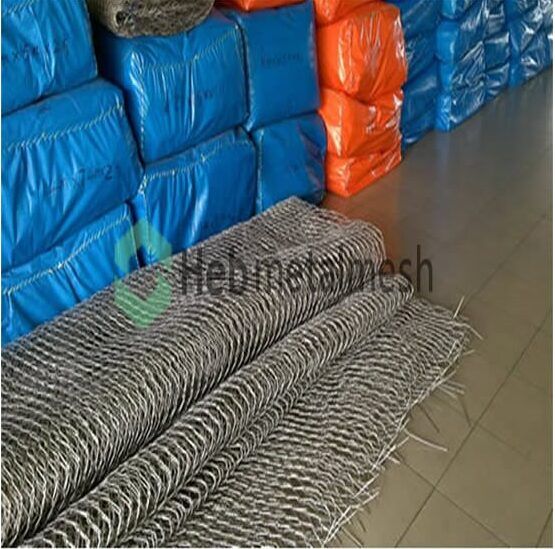
30′ × 60′ finished roll in SS304, breaking force 2,540 N. Specified for monkey, crane and large bird enclosures.

Codes HM1225 to HM32102, aperture 1″ to 4″, rope diameter 1.2 mm to 3.2 mm. Select by aperture and wire diameter

SS304 or SS316 rope with black oxide finish, chosen where mesh should stay visually recessive against a dark background. Available from 1/16″ to 1/8″ rope diameter.
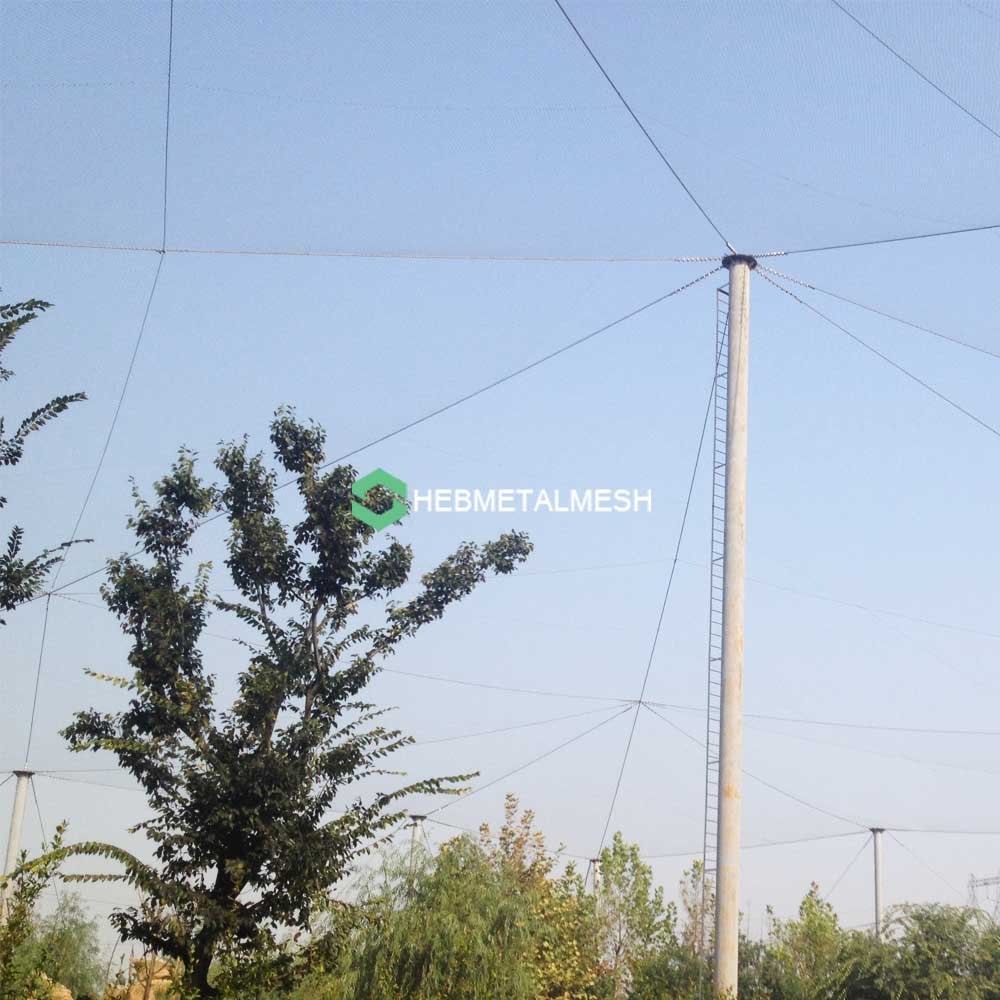
SS304 rope mesh in 1″ aperture, 1.6 mm rope, 2,135 N breaking force, 25′ × 60′ rolls in natural or black oxide finish. Used for small birds and aviary panels.
Stainless Steel Zoo Mesh, Direct from the Factory
Hand-woven SS304 and SS316 rope mesh for zoo enclosures, aviary netting and animal barriers. Panels cut to your frame size, quoted DAP.
Stainless Steel Aviary Netting for Zoos and Bird Sanctuaries
Aviary panels are specified by two numbers: the aperture an escaped bird cannot pass, and the rope diameter that holds against impact. Both are matched to the species in the enclosure, and every panel is cut to your roof or side frame.
Species-to-specification selection
| Bird type | Code | Rope Ø | Aperture | Breaking force |
|---|---|---|---|---|
| Finches, parakeets, small songbirds | HM1225 / HM1625 | 1.2 – 1.6 mm | 1″ | 915 – 2,135 N |
| Macaws, cockatoos, large parrots | HM1638 / HM2450 | 1.6 – 2.4 mm | 1.5″ – 2″ | 2,135 – 4,091 N |
| Eagles, hawks, large raptors | HM2038 / HM2050 | 2.0 mm | 1.5″ – 2″ | 2,540 N |
| Cranes, flamingos | HM1650 | 1.6 mm | 2″ | 2,135 N |
- Weather and corrosion — SS304 or SS316 rope resists rain, snow, UV exposure, rust and salt corrosion, with a service life over 30 years.
- Visibility — the open rhombus aperture transmits light and keeps animals in clear view, which matters for both visitor experience and keeper observation.
Customize Your Bird Enclosure Mesh:
- Wire Rope Diameter: 1.2mm, 1.6mm, 2.0mm, 2.4mm, 3.2mm
- Mesh Size: 1″, 1.5″, 2″, 3″, 4″
- Material Grade: Stainless Steel 304 or 316
- Finish: Natural or Black Oxide
- Roll length: cut to your frame, up to 30′ × 60′
Most aviary projects use 1.6 mm rope; heavier rope is specified where large parrots or raptors are held. Send your species list and frame dimensions for a DAP quotation.
Release enclosures and display aviaries size differently — the eagle release mesh guide covers the sizing logic.

Walk-in aviary with stainless steel rope mesh on the roof and side panels.

Macaw flight aviary enclosed with rope mesh panels.

Eagle flight enclosure built on a steel frame with rope mesh panels.
Stainless Steel Mesh for Big Cat and Primate Enclosures
Big cat and primate enclosures carry the highest impact loads on a zoo site. Rope mesh is specified here for two reasons: the knotted joints flex under a strike instead of cracking, and keepers, vets and visitors all need to see through the barrier.
Species and position selection
| Animal | Code | Rope Ø | Aperture | Breaking force | Position |
|---|---|---|---|---|---|
| Tigers, lions, leopards | HM3250 / HM3276 | 3.2 mm | 2″ – 3″ | 7,800 N | Vertical |
| Tiger, lion, leopard roofs | HM32102 / HM2476 | 2.4 – 3.2 mm | 4″ | 4,091 – 7,800 N | Roof |
| Gorillas, primates | HM2050 / HM2450 | 2.0 – 2.4 mm | 2″ | 2,540 – 4,091 N | Vertical |
| Wolves, deer | HM2076 | 2.0 mm | 3″ | 2,540 N | Perimeter |
Panels cut to your frame
Panels are cut to your frame dimensions in SS304 or SS316, with aperture and rope diameter selected per species and per position — vertical panels carry a different load from roof panels over the same enclosure. Send the species list and frame drawings for a DAP quotation.
Group composition changes the load on the same panel — see our notes on specifying lion enclosure mesh for a breeding group

Leopard exhibits use heavy rope mesh where the animal tests the barrier at height.

Roof panels over lion enclosures use 4″ aperture to reduce weight on the steel frame.

Rope diameter is chosen for the largest animal in the enclosure, not the average.
Send the species list and frame drawings.
We quote DAP and confirm aperture, rope diameter and panel sizes before production.